
Wildlife Fine Art Photography Prints
The wildlife work in this collection spans five countries and a deliberately wide range of subject and register — polar bear on Greenlandic ice, scarlet macaw in the Costa Rican rainforest canopy, African elephant at the Chobe waterline, pied kingfisher on a skeletal branch, wildebeest crossing the Masai Mara, sambar deer in the Rajasthani dry forest, spider monkey mid-leap between rainforest trees, and a greater one-horned rhinoceros on a Nepalese riverbank. The working filter is simple: no staged images, no baited encounters, no captive subjects. Every image is the result of expedition work in the animal's home terrain. Where the obvious headline species is tiger, lion, or bear, the collection deliberately moves one step sideways — to the sambar deer that is the tiger's preferred prey, to the behavioural frame rather than the portrait, to the environment that produces the animal rather than the animal alone.

King of Ice
One of the most remote fjord systems on earth, where polar bears are hunted by local communities and are not easily seen. On our first zodiac outing from the expedition vessel, in the fading evening light, this bear rolled lazily atop its perch - completely unbothered and sovereign. We never saw another one for the rest of our expedition.
Arctic Canvas
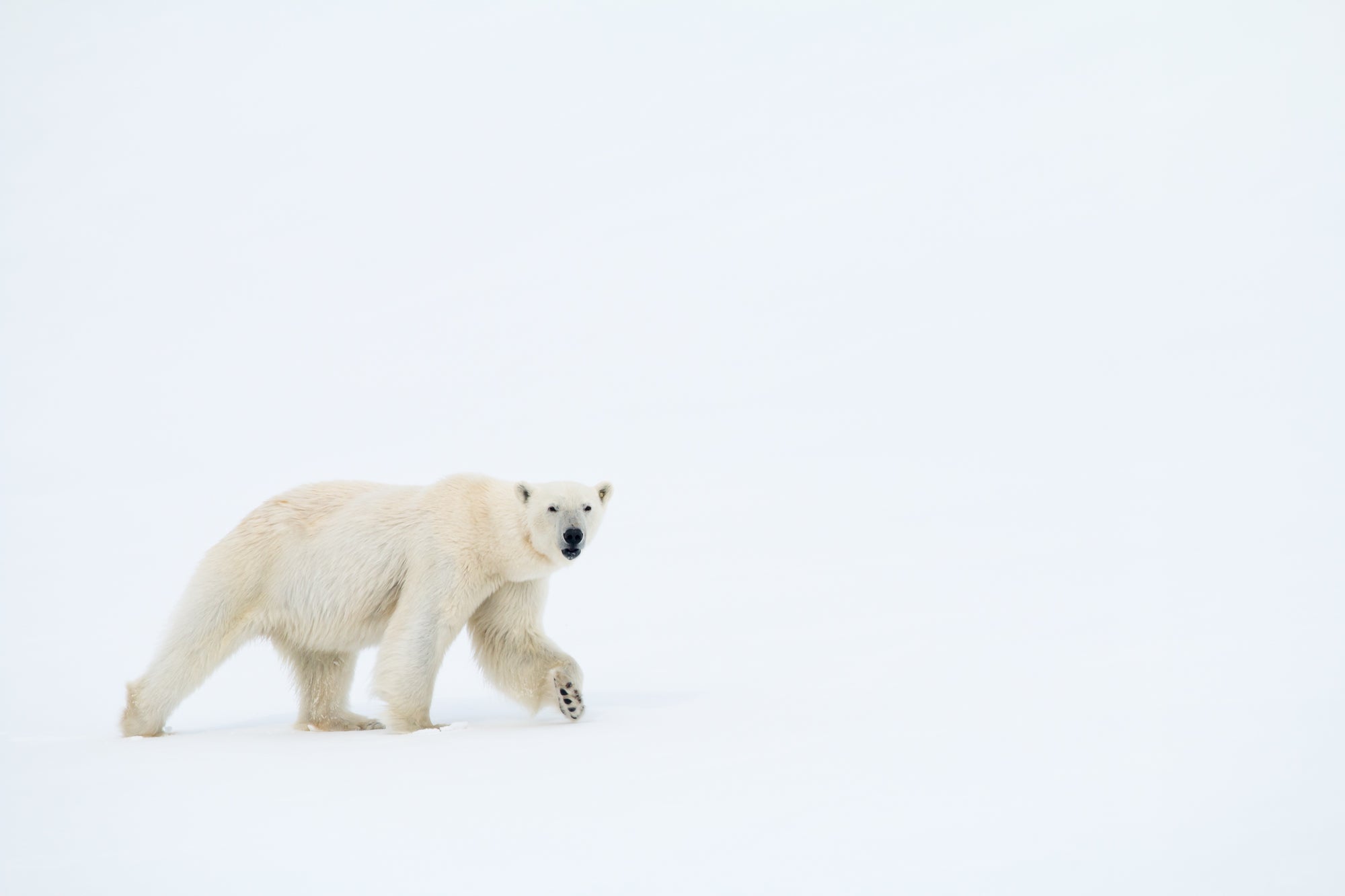
Svalbard is the northernmost inhabited archipelago on earth. While tracking a swimming walrus from our zodiac, a flash of movement caught my eye - spotting a white bear against a white landscape is harder than it seems. We edged closer and I was able to compose this apex predator against the pure white canvas of the Arctic.
Stillness in the Storm
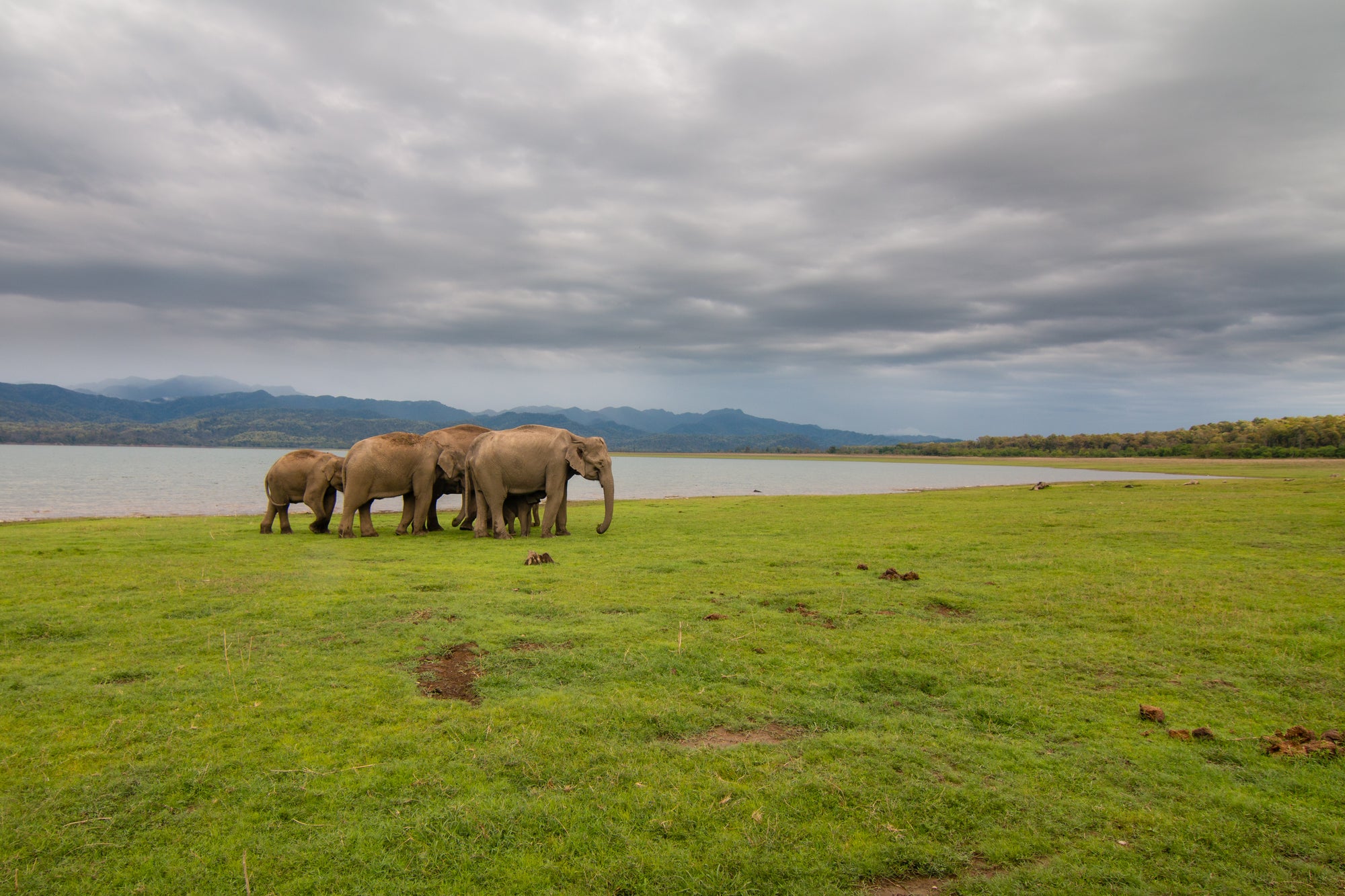
Jim Corbett National Park - two rivers shape this ecosystem, and the meadows along the Ramganga are where elephants are most often found. This herd was just metres from our vehicle — close enough for the usual tight portraits, but the drama in the frame made me go wide and create a habitat photograph.
The Ancient Grazer
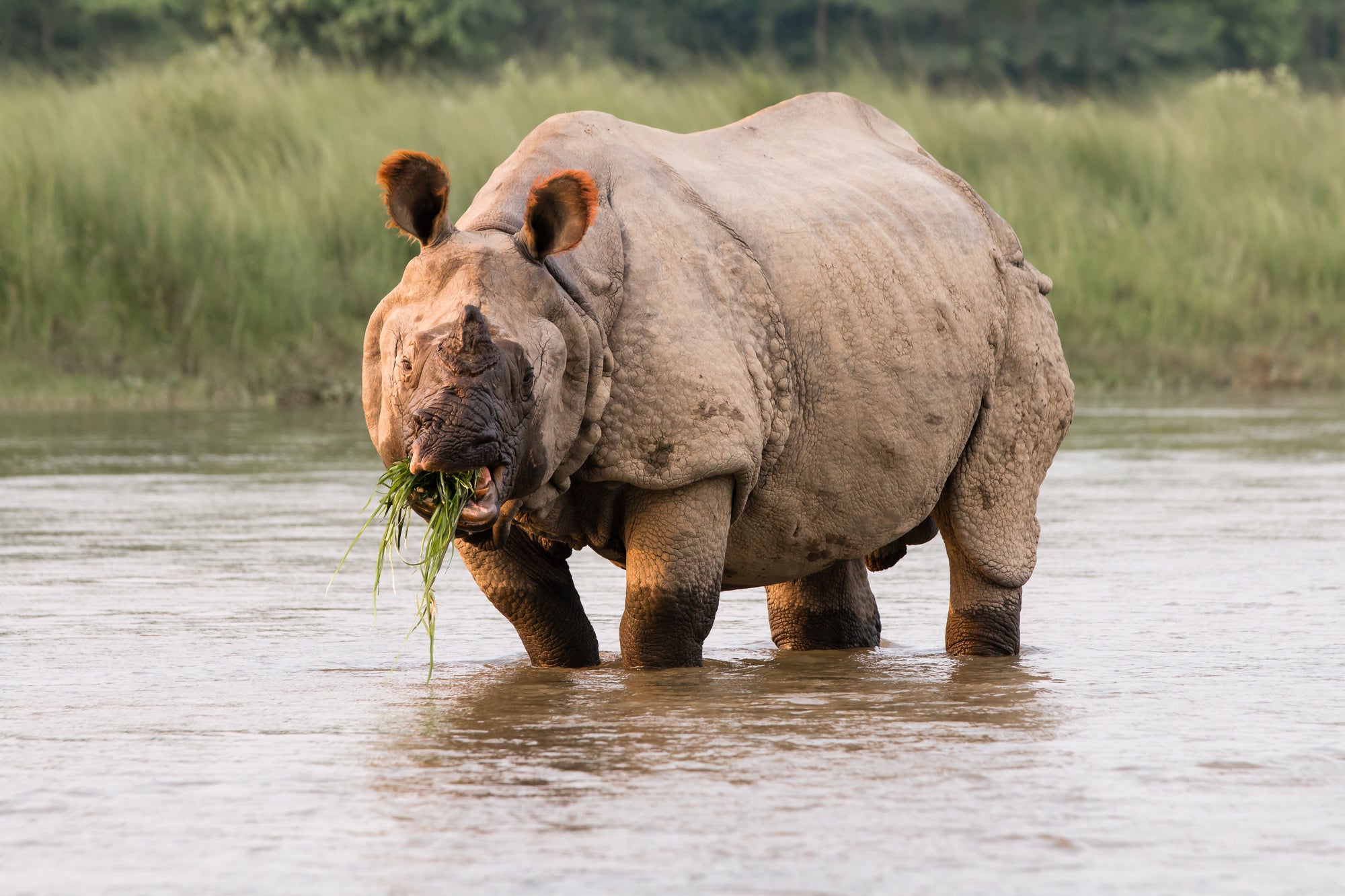
Chitwan National Park in Nepal is one of the best places on earth to spot the greater one-horned rhinoceros. Navigating the Rapti river by a small boat provides the eye-level access that no safari vehicle can match. This animal's lineage stretches back over 8 million years — there is something humbling about being that close to a creature that has outlasted nearly everything.
The Quiet Power
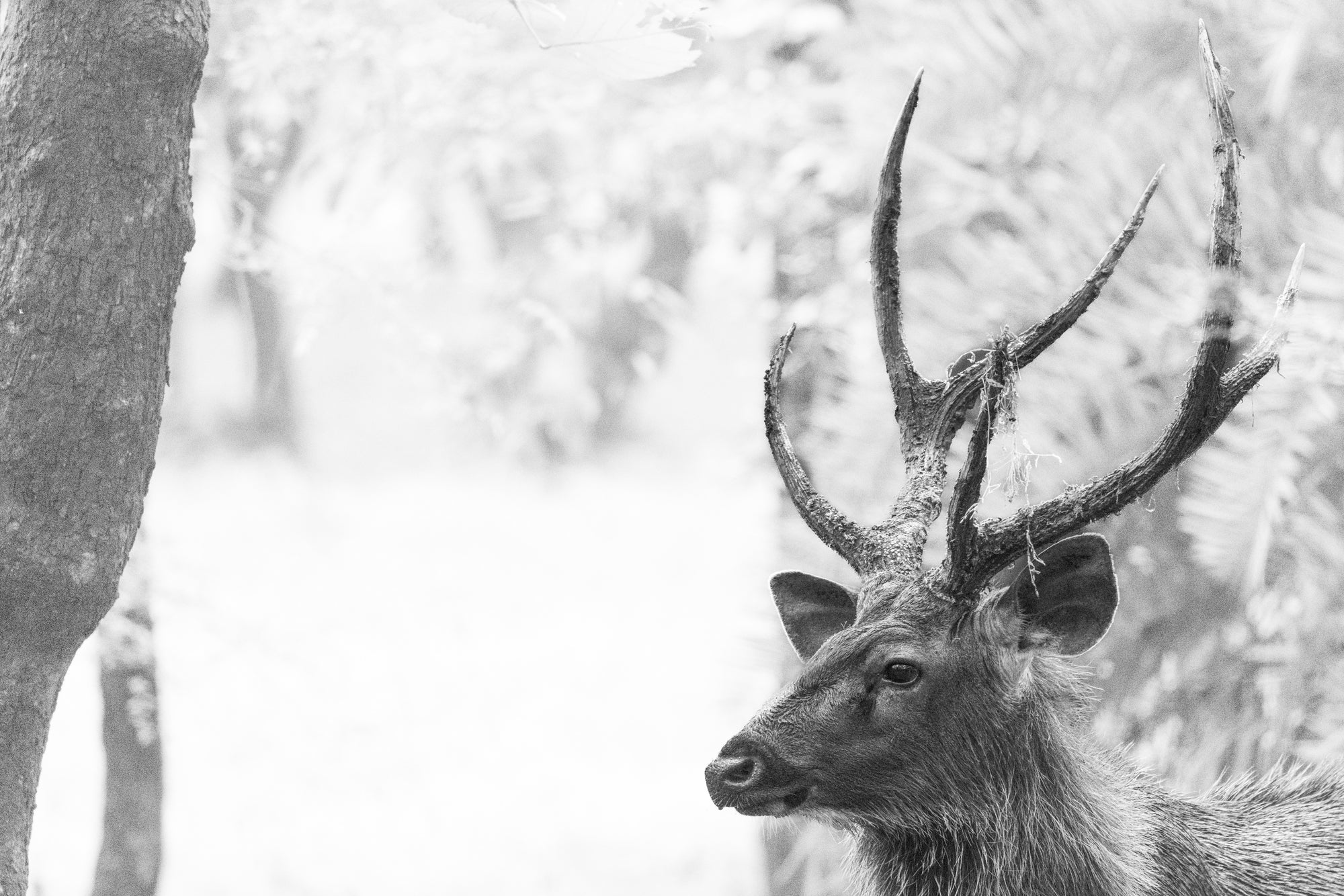
The sambar deer is the Bengal tiger's preferred prey. Yet, nothing about this one suggests vulnerability, instead displaying grace and strength in equal measure.
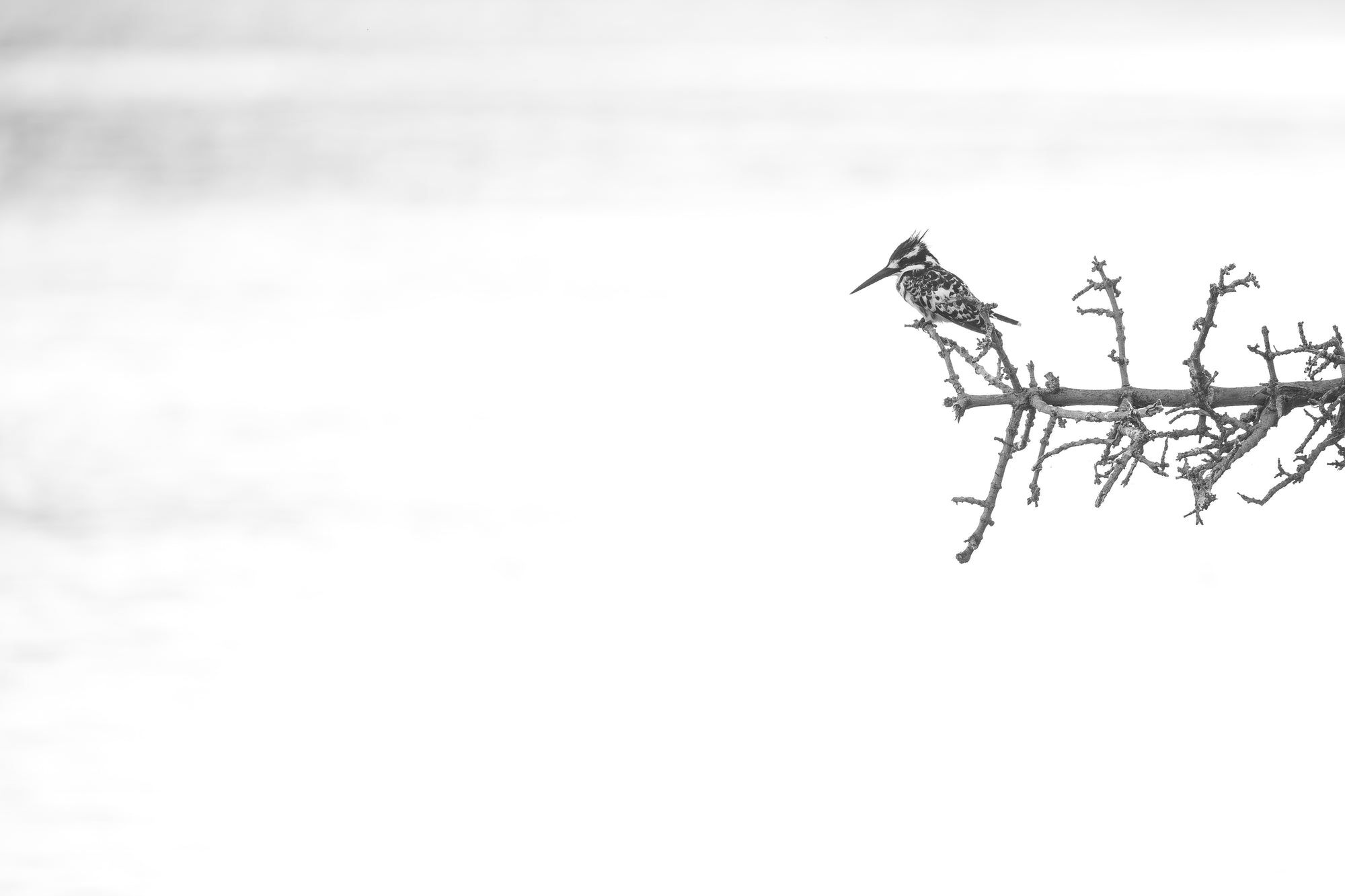
Sketch
High contrast black and white immediately came to mind as I spotted this pied kingfisher perched on a skeletal branch. An artist sitting on the banks of the river could have sketched this on their canvas.
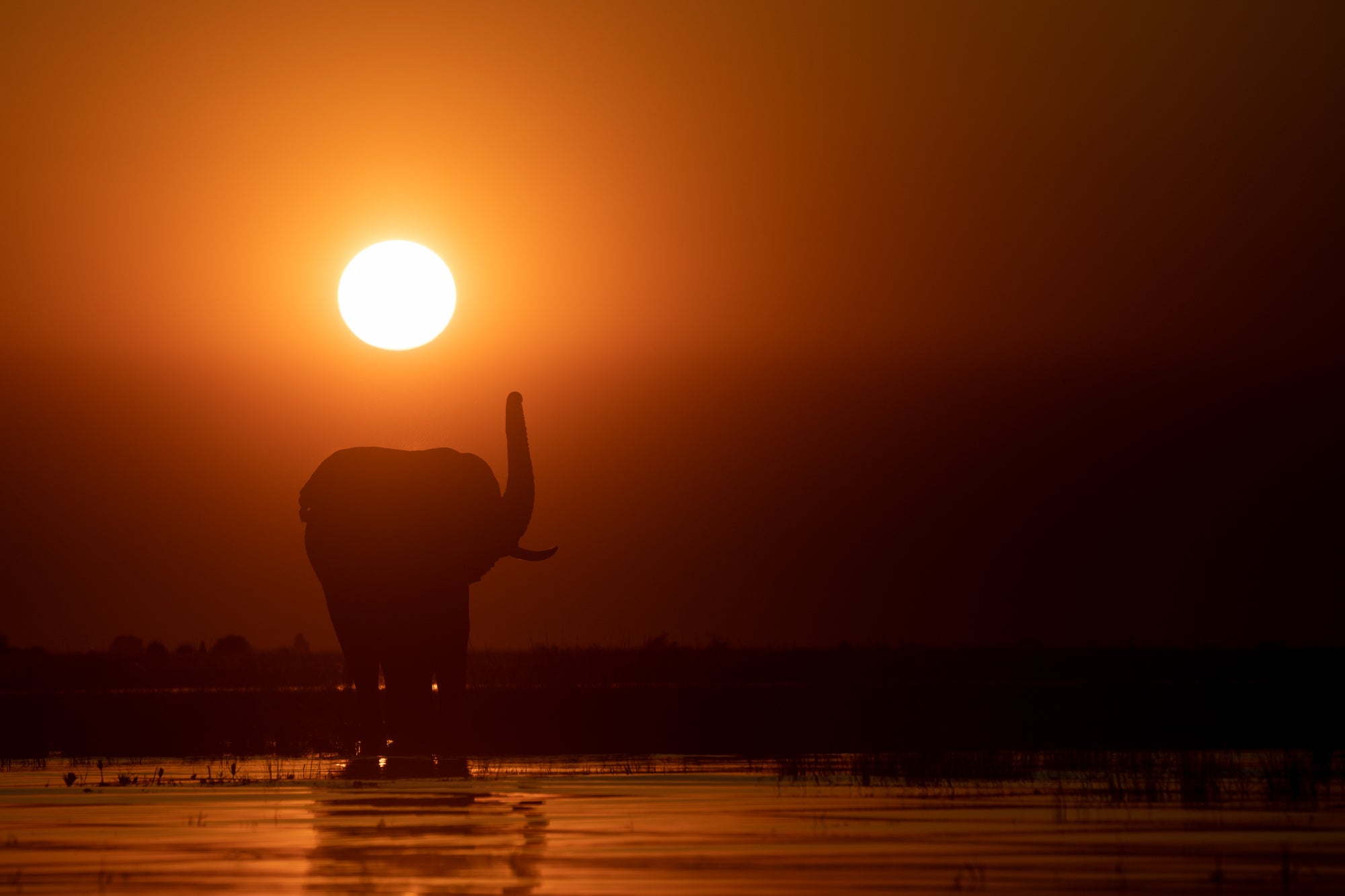
The Chobe Salute
Photographing elephants at the river's edge against the setting sun in Chobe is one of the reasons you get on boat safaris here — the Chobe has one of the largest elephant populations on earth, and the light in the golden hour is extraordinary. This one raised its trunk just as it waded in creating one of my most memorable frames from Botswana.
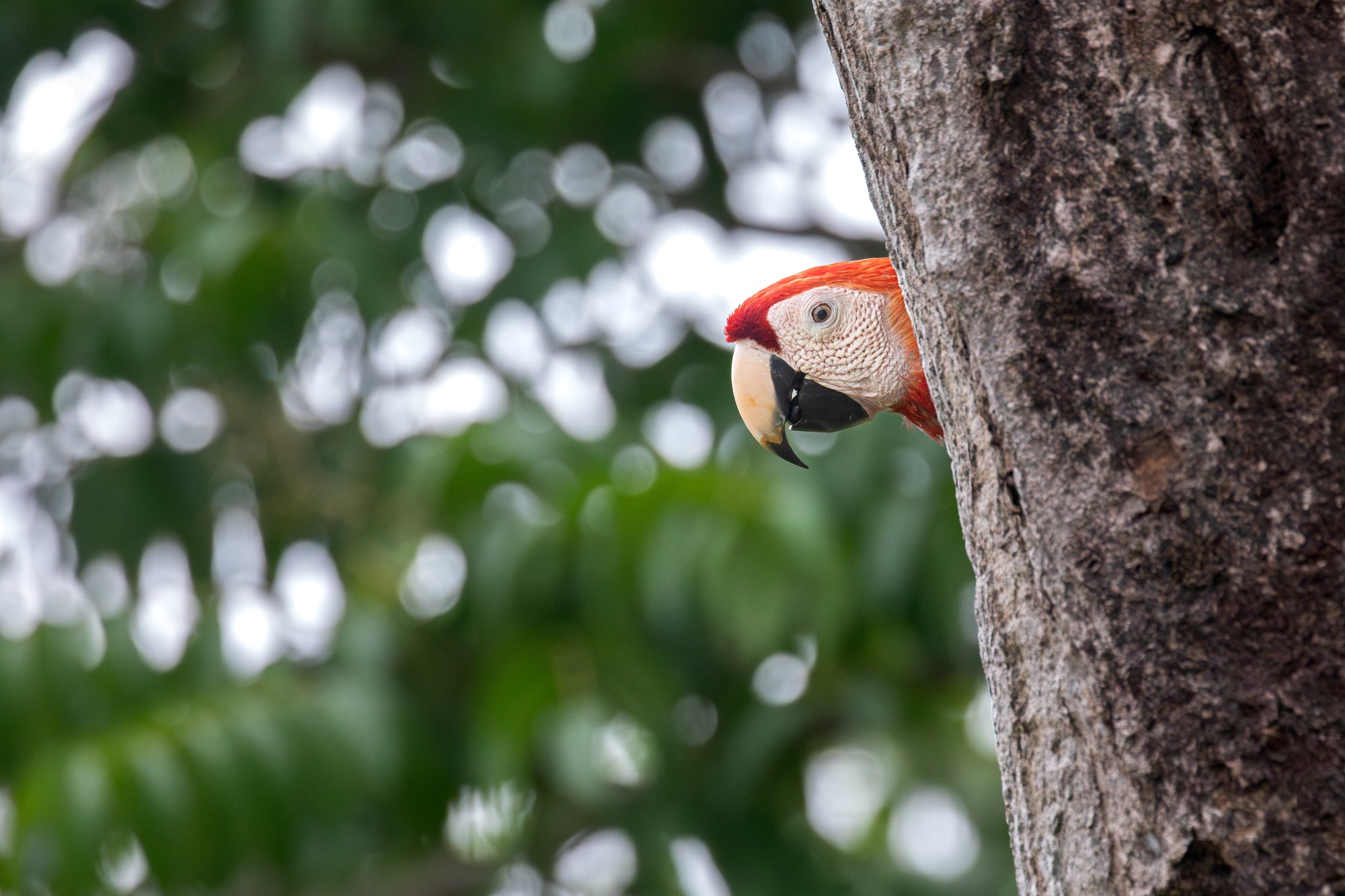
The Scarlet Peek
Scarlet macaws are the most iconic bird in this corner of Central America, but getting close is rarely this easy, as they're cautious, fast and usually high in the canopy. This one was at its nest cavity, a hollow carved into the trunk of a large tree, and paused just long enough to look out for me to get the frame.
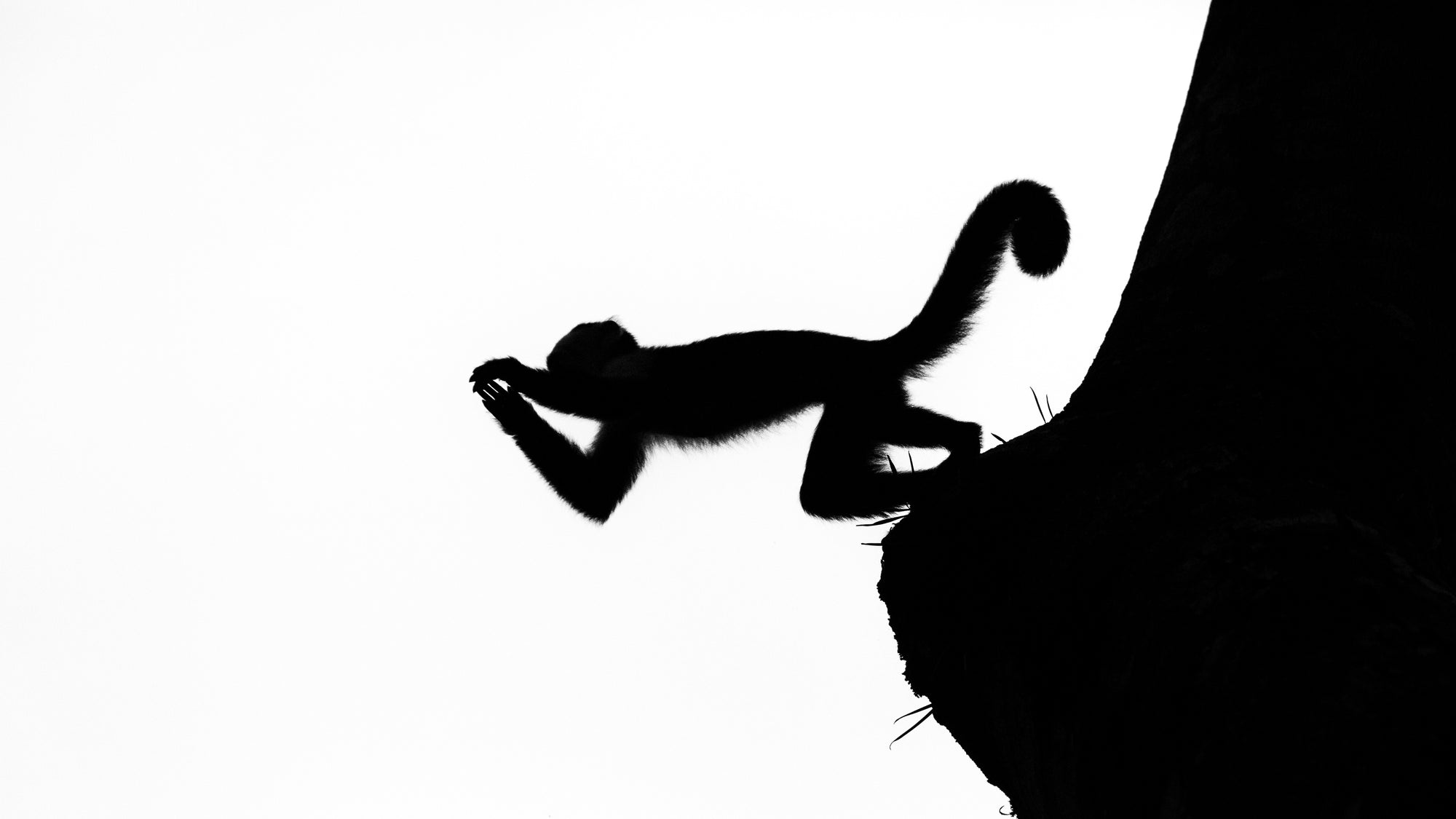
Make the Leap
Spider monkeys are the most commonly spotted primate in the Osa Peninsula, hence creating unique images is not easy. This is the frame just before the leap, the monkey's tail coiled, its weight loaded on the edge. I chose it over the more dramatic mid-air jump itself, because the pause signifies the potential ahead.

Life Moves On
The most iconic images of the Masai Mara migration show thousands of wildebeest crashing through rivers. But migration happens at every scale. Here, a small part of a larger herd moves across the grassland in single file; in a deliberate order that feels antithetical to the chaos the migration is known for.
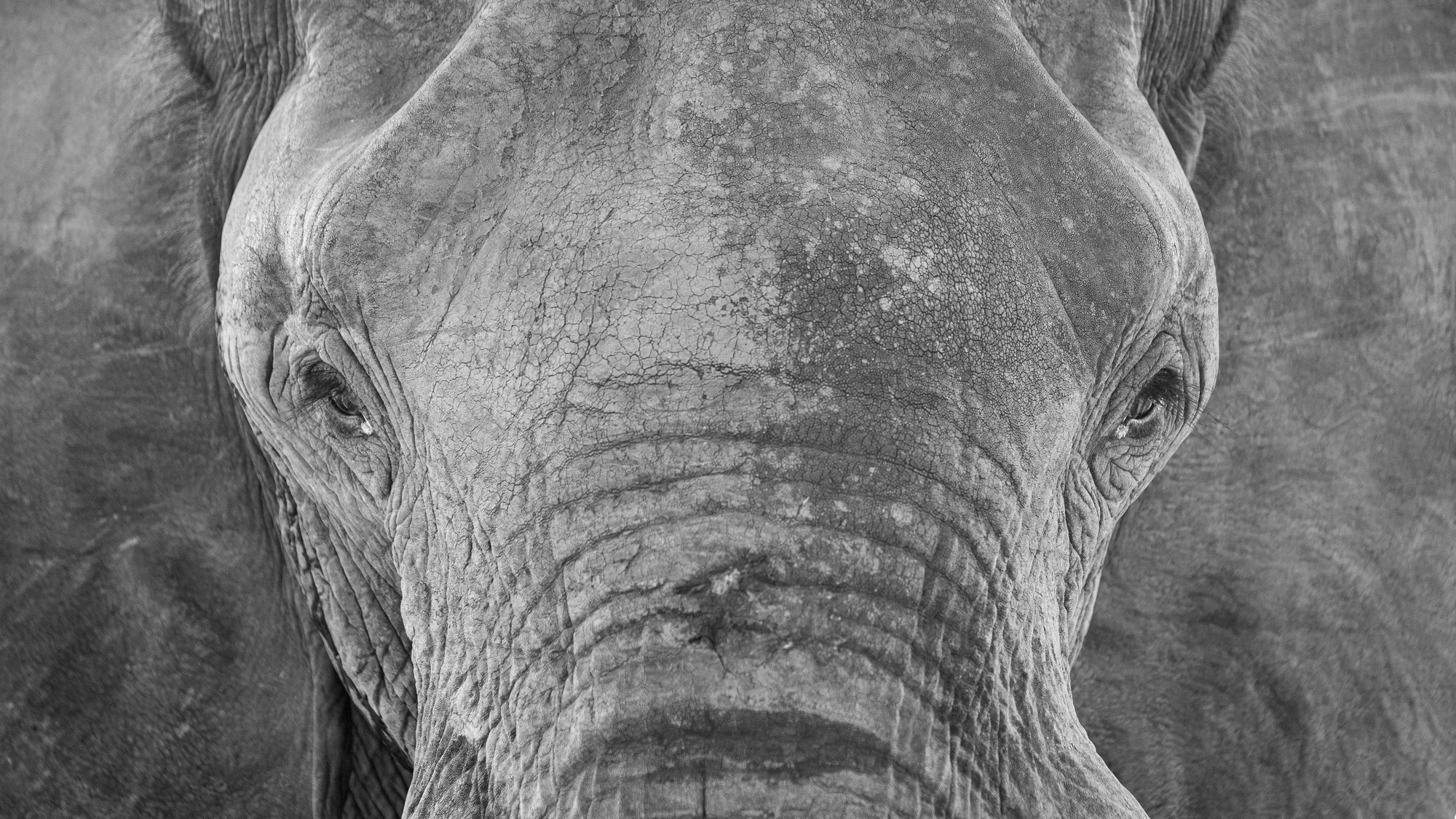
Time, Etched
Chobe in Botswana has one of the largest elephant populations on earth, and encounters on the ground are often closer than you expect. This tusker crossed within metres of our vehicle, close enough that a wide frame was impossible and a tight one became the only option. The black and white rendition of the close up elevates the texture and the skin signifies the elephant's years of lived experience on the land.
Each print is produced in Toronto on Fine Art Photo Rag, Acrylic Face-Mount, or ChromaLuxe HD Metal. Fine Art Editions of 30; King of Ice is the Signature Edition of 15.